

Keynotes
Trustworthy AI for Secure Multimedia Systems in Next-Generation Communication Networks
Dr. Wasim Ahmad is a Postdoctoral Researcher at Beijing Institute of Technology working at the intersection of deep learning, multimedia forensics, and secure networked systems. His research addresses emerging challenges in trustworthy AI, particularly the attribution and forensic analysis of AI-generated multimedia in large-scale communication environments.
He is the author of recent peer-reviewed works on efficient deepfake model attribution, including lightweight spatio-temporal attention frameworks designed for deployment in distributed and resource-constrained network infrastructures. His research advances forensic traceability, misinformation mitigation, and secure multimedia transmission across modern communication networks.
Dr. Ahmad received his Ph.D. in Information Science from National Chengchi University (joint program with Academia Sinica, Taiwan). His work has been published in leading venues including ACM Transactions on Multimedia Computing, Communications, and Applications (ACM TOMM) and Expert Systems with Applications. He actively contributes to research on building scalable, efficient, and trustworthy AI systems for next-generation digital communication platforms.
Abstract
How can we create technologies to help us reflect on and potentially change our behavior, as well as improve our health and overall wellbeing both at work and at home? In this talk, I will briefly describe the last several years of work our research team has been doing in this area. We have developed wearable technology to help families manage tense situations with their children, mobile phone-based applications for handling stress and depression, as well as automatic stress sensing systems plus interventions to help users just in time. The overarching goal in all of this research is to develop intelligent systems that work with and adapt to the user so that they can maximize their personal health goals and improve their wellbeing.

Wasim Ahmad
Beijing Institute of Technology
China

Stephen Arockia Samy
Shenzhen University
China
Control Systems and its Applications
Stephen Arockia Samy received the B.Sc. degree in mathematics from Ananda College affiliated to Alagappa University, Devakottai, India, in 2014, the M.Sc. and M.Phil. degrees in mathematics from Alagappa University, Karaikudi, India, in 2016 and 2017, respectively, and the Doctoral degree from Alagappa University, in 2024.
From 2023 to 2024, he was working as a Full Time Researcher with Kunsan National University, Gunsan, South Korea. He is currently a Postdoctoral Fellow with the College of Mechatronics and Control Engineering, Shenzhen University, Shenzhen, China. His current research interests include the stability theory of nonlinear systems, neural networks, multiagent systems, T–S fuzzy model, complex networks, and control theory.
Abstract
The last years saw a steep increase in the number of wearable sensors and systems, mhealth and uhealth apps both in the clinical settings and in everyday life. Further large amounts of data both in the clinical settings (imaging, biochemical, medication, electronic health records, -omics), in the community (behavioral, social media, mental state, genetic tests, wearable driven bio-parameters and biosignals) as well as environmental stressors and data (air quality, water pollution etc.) have been produced, and made available to the scientific and medical community, powering the new AI/DL/ML based analytics for the identification of new digital biomarkers leading to new diagnostic pathways, updated clinical and treatment guidelines, and a better and more intuitive interaction medium between the citizen and the health care system.
Thus, the concept of connected and translational health has started evolving steadily, connecting pervasive health systems, using new predictive models, new approaches in biological systems modeling and simulation, as well as fusing data and information from different pipelines for more efficient diagnosis and disease management.
In this talk, we will present the current state-of-the-art in personalized health care by presenting cases from COVID-19 and COPD patients using advanced wearable vests and new technology sensors including lung sound and EIT, new outcome prediction models in COVID-19 ICU patients fusing X-Rays, lung sounds, and ICU parameters transformed via AI/ML/DL pipelines, new approaches fusing environmental stressors with -omics analytics for chronic disease management, and finally new ML/AI-driven methodologies for predicting mental health diseases including suicidality, anxiety, and depression.
Graph Representation Learning Techniques for Complex Networks
Haobing Liu is an Assistant Professor in the School of Computer Science and Technology, Ocean University of China. He obtained his Ph.D. degree in Computer Science from Shanghai Jiao Tong University in 2022. He was awarded the ACM China Council Qingdao Chapter Honored Doctoral Dissertation. His research focuses on data mining, machine learning, and IoT application. He has published 27 research papers in top-tier conferences and journals, including Information Fusion, TKDD, TBD, KBS, WWW, CIKM, TOIS, and SIGIR. He serves as a Guest Editor for Symmetry-Basel.
Abstract
Real-world networks, such as urban transportation networks, social networks, and user-item interaction networks, can be represented as graphs. Therefore, the development of graph representation learning techniques has promoted advancements in network analysis and prediction. This presentation will introduce high-order graph structure capturing techniques for homogeneous graphs, graph representation learning techniques for weighted homogeneous graphs with noisy edges, and joint capturing techniques for node attributes, low-order, and high-order graph structures in heterogeneous graphs. The ultimate goal is to achieve representation learning for complex graphs and perform tasks such as node classification and clustering.
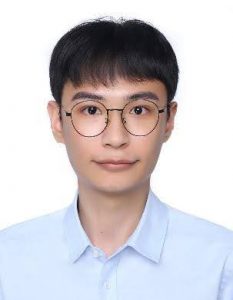
Haobing Liu
Ocean University of China
China
